Showing posts with label #eugenics. Show all posts

Sunday, April 24, 2016

Karl Pearson: Mathematician, Statistician and a healthy dash of Sketch

Karl Pearson’s impressive career as a statistician was driven by his desire to marry statistics with biological observation. He was a devout social Darwinian who truly wanted to use science and statistics in order to contribute to the idea of “survival of the fittest.” Unfortunately, his philosophy as a social Darwinian can be summed up into a very contentious idea: Eugenics.
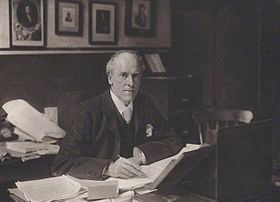
But before we embark on the controversy of eugenics, let’s take a step back and discuss Pearson’s early life and educational history. He was the second child of Fanny Smith and William Pearson, a barrister of the Inner Temple. Interestingly, he was born Carl, but at the age of 23 changed his name to Karl, which is how he is known today. It goes without saying that Pearson was highly educated. He, as well as his brother and sister, were educated in the home until the age of nine when he was sent to the University College School in London. He studied there until age 16, when he had to leave due to illness. He was then educated by a private tutor. He received a scholarship to King’s College, Cambridge. During his formal education, he dabbled in everything from literature, writing, law, and must importantly, mathematics.  His primary interest in statistics can be traced to his collaboration with Walter Weldon, with whom he founded biometry, which used mathematical modeling to explain biological sciences. Pearson’s interest in statistics continued through his introduction to Francis Galton, who was Darwin’s cousin and also known as the “father of eugenics.”


After graduating from Cambridge, Karl trained at the University of Heidelberg in Germany. There he studied physics under G.H. Quincke and metaphysics under Kuno Fischer. He traveled to Berlin to attend lectures and was strongly influenced by the courses he took there in physics as well as Roman literature, medieval and 16th century German literature, and socialism. He then moved back to London working first at Cambridge, then took rooms at the Inner Temple but never practiced law. He finally moved to a faculty position at University College, London. There he was appointed to the Chair of Applied Mathematics as a Goldsmid Professor.
At this point, most of Pearsons’ statistical contributions have a distinct air of eugenics about it; he used correlations and regressions to make a point that biological fitness can only be brought about by selective breeding (ie. Eugenics) and cannot be done with social reform.  So… Yeah. His motivations are a little dubious.
Pearson's Chi Square Test Statistic

But his statistical contributions were still impressive. Pearson is considered one of the founding fathers of modern statistics. One of his most recognized contributions is his work establishing the Pearson Chi-Square test which measures a “goodness of fit” between two independent, unpaired categorical variables and their respective categorical frequencies. Additionally, he built on the ideas of Galton, and laid the groundwork for future work by RA Fisher and Egon Pearson. He further developed Galton’s idea of correlation generating the correlation coefficient, known as Pearson’s r. Pearson's r is a measure the linear relationship between two variables. Pearson also developed tests to assess the distribution of data, such as evaluating skewness and kurtosis. Many people before him would often force data into a normal distribution. Last but not least, Pearson is responsible for first introducing the p-value into modern statistics. P-value statistics were further developed by RA Fisher. While Pearson’s motivations are dubious, he did lay the foundation for modern statistics, and without Pearson’s contributions we may not have seen the advancements in statistics that we know today.

Saturday, April 23, 2016

Sir Francis Galton


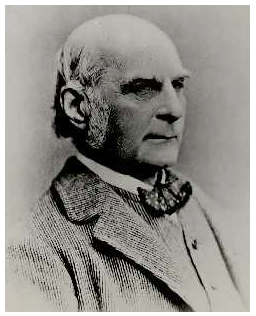
Galton Pic.pngSir Francis Galton was a quintessential renaissance man: an avid explorer, meteorologist, anthropologist, sociologist and statistician.  He was a natural statistician, always measuring and counting the things he experienced. These included such concepts as attraction, love, beauty, and the effectiveness of prayer.  Sir Galton brought us maps of southern Africa, narratives on the tribes of what is today Namibia and Angola, the first weather map, and several essential statistical methods that are at the foundation of the field.  He was committed to the understanding of man and the advancement of the species, particularly through the application of statistical methodology to heredity and, ultimately, eugenics.  Although looking through the retrospectoscope his pursuits in eugenics may seem misguided, it was a novel application of quantification to humanity.  In all of his pursuits one sees a degree of categorization and analysis. As such, he presents to us a unique perspective of looking at the world, one though the lens of quantification.


Born in 1822 in England, Francis Galton was raised in prosperity, being the son of the bank director Samuel Tertius Galton. Even in childhood he found pleasure in learning, relishing the study of languages, math, and literature. He first pursued this passion in the field of medicine, studying at Birmingham General Hospital and King’s College.  However, before he completed his degree in medicine his interests shifted to mathematics, which he began studying at Cambridge.  During this time his father passed away, leaving him a sizable inheritance which allowed him to abandon his degree and pursue what, one may argue, was the purest form of discovery, exploration.  He joined the Royal Geographical Society and began trips to southern Africa.  Yet Galton did not abandon his penchant for quantification, rather incorporating it while cataloging his adventures as can be seen in his work in cartography and anthropology.  

These early pursuits brought him great acclaim, particularly from the society, but his geographic exploration came to an end in 1853 when he married Louisa Jane Butler. Marriage dramatically changed his lifestyle but his passion for discovery was not curtailed. Perhaps because of his experiences with cartography and different climates abroad, Galton soon developed a keen interest in meteorology.  His work in this field was groundbreaking. He published extensive work on the mapping of weather patterns and was the first to draft a climate map.

Heavily influenced by his cousin, Charles Darwin’s On the Origin of Species, Galton also began formulating his own theories of heredity and human intelligence.  He began to study genealogy, marrying this with his anthropological interest in understanding communities.  It is through these anthropometric studies that we see one of the first uses of surveys and questionnaires to collect data for categorization and analysis of communities.  Concurrently to his genealogical work, he began working to understanding the human mind, also approached in a quantitative fashion. For this reason he is considered the founder of psychometrics and differential psychology.  Francis developed one of the first intelligence tests, which he employed to study the impacts of “nature versus nurture,” a phrase he coined, on his subjects. Francis’s studies were not limited to quantification of human traits. Like Gregor Mendel, he experimented in horticulture and worked extensively with sweet peas.

In order to interpret it the wealth of data he was accumulating, Francis used his mathematical background to make several advances in statistics, including the measure of the standard deviation, the discovery of the properties of the bivariate normal distribution and its relationship to regression analysis, and correlation.  The concept of regression, initially titled “reversion,” was developed by looking at normal distribution of seed sizes that regressed from the parent population. His development of the correlation coefficient came from multiple iterations of graphing bivariate data. Through this process he eventually had an epiphany that the formulae used to describe elliptical curves could also be used to mathematically describe his data. Galton also showed a keen interest in the mathematical analysis of physical characteristics, particularly fingerprints. His work was essential to the development of the field of biometrics.  

As has been seen in his approach to all of his endeavors, Francis was compelled to quantify the world around him. He hoped statistics would help overcome the human tendency to be swayed by emotions rather than facts. Perhaps it was this commitment to an analytical approach to life that lead him to propose an ‘evolutionary’ approach to advancement of the human race and the solutions seen in eugenics.  For Francis, eugenics was “...the science which deals with all influences that improve the inborn qualities of a race.” By understanding and selectively ‘breeding’ the human population, he hoped to make “The race as a whole... less foolish, less frivolous, less excitable, and politically more provident than now.” He published a paper entitled, Probability: The Foundation of Eugenics in which he argued that human nature blinds us to reason. He claimed that this dangerous path can only be rectified by following principles set by science and statistics because “love is fickle… and so is public opinion.”  

Francis believed that “[statistics were] the only tools by which an opening may be cut through the formidable thicket of difficulties that bars the path of those who pursue the Science of Man.” Francis was clearly passionate about analysis and saw beauty in the ability to order.  In speaking of the Gaussian distribution Francis said, “I know of scarcely anything so apt to impress the imagination as the wonderful form of cosmic order expressed by the law of frequency of error.  The law would have been personified by the Greeks if they had known of it.  It reigns with serenity and complete self-effacement amidst the wildest confusion.  The larger the mob, the greater the apparent anarchy, the more perfect is its sway.  It is the supreme law of unreason." Despite his occasional missteps, Galton’s reverence for objectivity and passion for exploration guided him to become a prolific investigator. His worldview generally enhanced the quality of the scientific pursuit and his work is essential for the way we approach and evaluate experiments today.